Korean DMZ Becomes Wildlife Haven After Seven Decades of Human Isolation
Created after the Korean War armistice in 1953, the Korean Demilitarised Zone has remained largely inaccessible to civilians for more than seven decades. The 155-mile corridor has consequently avoided much of the development and intensive farming seen elsewhere, allowing endangered mammals, migratory birds and other species to thrive. Conservation groups are now studying the region while carefully expanding protected areas and controlled eco-tourism.
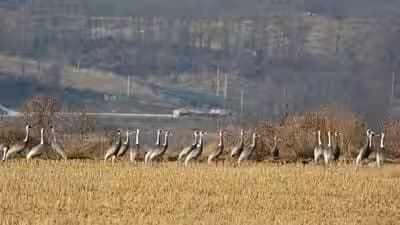
More than seven decades after the Korean War ended, one of the world's most heavily guarded borders has developed into an unexpected refuge for wildlife.
The Korean Demilitarised Zone, or DMZ, stretches roughly 155 miles across the Korean Peninsula and separates North and South Korea. Established under the 1953 armistice, the area remains surrounded by fences, military posts and landmines, keeping most people away.
That prolonged human absence has had an unusual environmental effect. Large parts of the region have escaped roads, buildings and intensive agricultural development, creating habitats for plants and animals that have struggled elsewhere in East Asia.
Korean DMZ supports thousands of species
The DMZ and surrounding areas have recorded about 6,168 species over the past seven decades, according to surveys cited in the report.
The region is also home to a significant share of the endangered species found on the Korean Peninsula. Among the animals recorded in the area are musk deer, leopards, long-tailed gorals and Asiatic black bears.
Remote cameras have captured black bears in the region, including a young animal that researchers say provides evidence that the species could be reproducing there.
Rivers crossing the area are also used by otters, which move through the landscape without regard for the political boundary separating the two countries.
Migratory birds find refuge near the border
The region's wetlands and agricultural areas are particularly important for birds.
Seven of the world's 15 crane species have been observed around the DMZ, including endangered red-crowned and white-naped cranes.
The importance of the area has grown as wetlands in other parts of East Asia have declined. Rice paddies and marshes close to the Korean border provide feeding and resting grounds for migratory birds travelling through the region.

Dany is a business journalist with Annuity Outlook Magazine, with over 16 years of experience across print, digital, and wires. He covers business, technology, policy, and corporate developments, with a focus on in-depth reporting and analysis. Over the years, he has worked across multiple editorial platforms. Skilled in content creation, editing, proofreading, and overseeing print layouts, his career spans multiple editorial platforms.