US Open Late-Night Matches Draw Player Backlash Over Scheduling
The US Open's growing number of matches finishing after midnight has triggered criticism from former champions and leading players. Three of the first six night sessions ended after 2 am, while several others went beyond 1 am. Players including Alexander Zverev, Jessica Pegula, Venus Williams, Ben Shelton and Aryna Sabalenka have raised concerns about sleep, recovery and the impact on subsequent matches.
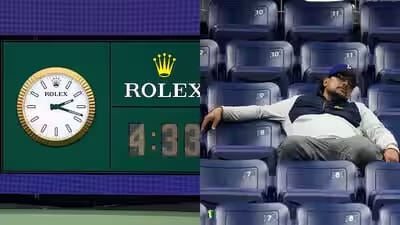
The US Open's tradition of late-night tennis is facing renewed criticism after an unusually high number of matches stretched into the early hours during the opening week of the 2026 tournament.
Three of the first six night sessions ended after 2 am local time, while two others continued beyond 1 am. The schedule has prompted concerns from four-time US Open singles champion Martina Navratilova, former champion Boris Becker and several players competing at this year's Grand Slam.
Navratilova criticised the pattern on X, calling the schedule unsustainable. Becker also questioned why tennis players are expected to compete at such late hours.
The debate centres on a familiar tension at the US Open: the tournament's night-time atmosphere and television commitments on one side, and player recovery and welfare on the other.
Zverev faces consecutive late finishes
Alexander Zverev has experienced the scheduling problem directly.
The German top seed's opening two matches ended at 1:55 am and 2:15 am. That made him the first top-seeded men's player in the Open era to begin a major with back-to-back five-set matches.
After one of his early finishes, Zverev offered a brief assessment of the situation.
"Everybody's tired," he said. "Everybody wants to go to sleep."
The concern is particularly relevant in a Grand Slam, where players have to recover from long matches before returning to the court for another round.
Pegula questions 2 am finishes
World No. 3 Jessica Pegula acknowledged that organisers have to consider television schedules and other operational demands. However, she questioned whether those factors justify matches ending in the early morning.
Pegula pointed out that many spectators have already gone home or are asleep by the time some matches finish.

Dany is a business journalist with Annuity Outlook Magazine, with over 16 years of experience across print, digital, and wires. He covers business, technology, policy, and corporate developments, with a focus on in-depth reporting and analysis. Over the years, he has worked across multiple editorial platforms. Skilled in content creation, editing, proofreading, and overseeing print layouts, his career spans multiple editorial platforms.