Namo Bharat Solar Project: Rs 450 Crore Plant to Supply Nearly 60% of Delhi-Meerut Corridor’s Power
The Delhi-Meerut Namo Bharat corridor is set to get a 110 MW captive solar plant costing around Rs 450 crore. The project is expected to meet nearly 60% of the corridor’s electricity needs, reduce annual power expenditure by about 25% and cut carbon dioxide emissions by around 1.8 lakh tonnes a year.
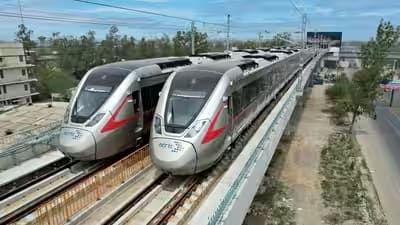
The Delhi-Meerut Namo Bharat corridor is set for a major renewable energy boost, with a proposed 110 MW captive solar plant expected to meet nearly 60% of its electricity requirements and lower annual power expenditure by around 25%.
The National Capital Region Transport Corporation (NCRTC) has signed a power purchase agreement with NIRL NCRTC Renewables Limited (NNRL) for the project. The solar plant is estimated to involve an investment of around Rs 450 crore and will be developed in Uttar Pradesh.
The initiative comes as the Delhi-Meerut RRTS corridor continues to expand its role as a high-speed regional transport network. The corridor spans more than 80 kilometres and connects Delhi with Ghaziabad and Meerut. Namo Bharat trains can operate at speeds of up to 160 kmph, reducing the Delhi-Meerut journey to less than an hour.
Solar plant to supply nearly 60% of corridor’s electricity
Electricity is a major recurring expense for the Namo Bharat corridor, accounting for around 30% to 35% of its operating costs.
The proposed captive solar project is expected to address a substantial portion of that requirement. Under the agreement, NCRTC will purchase electricity generated by the plant at a fixed tariff for 25 years, giving the organisation greater certainty over long-term energy costs.
NNRL will develop the project in Jaulan, Uttar Pradesh, using an 80:20 debt-equity funding structure. The electricity generated will be transmitted through the Uttar Pradesh state grid to NCRTC receiving substations in Uttar Pradesh and Delhi before being distributed along the corridor.
Officials said the project is expected to be commissioned within 24 months.
Rs 450 crore investment and lower operating costs
The solar project is expected to reduce the corridor's annual electricity expenditure by approximately 25%. For a transport system where electricity represents a significant share of operating expenses, the reduction could help lower recurring costs over the long term.

Dany is a business journalist with Annuity Outlook Magazine, with over 16 years of experience across print, digital, and wires. He covers business, technology, policy, and corporate developments, with a focus on in-depth reporting and analysis. Over the years, he has worked across multiple editorial platforms. Skilled in content creation, editing, proofreading, and overseeing print layouts, his career spans multiple editorial platforms.