Trump Says Ships Begin Moving Through Strait of Hormuz After US-Iran Peace Deal | Annuity Outlook Magazine
Trump Says Ships Are Moving Through Strait of Hormuz as US-Iran Deal Raises Hopes for Global Trade Recovery
Donald Trump says oil ships are beginning to move through the Strait of Hormuz after a US-Iran agreement. Hundreds of vessels remain stranded as mine-clearing and negotiations continue.
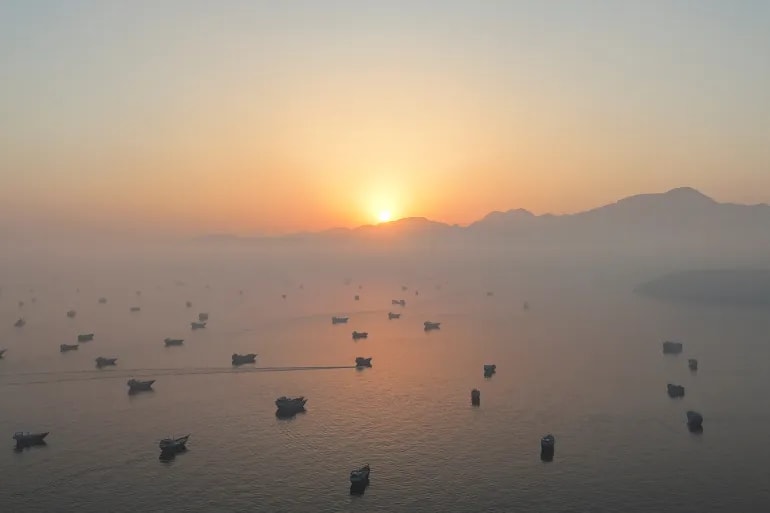
Caption: Trump Says Ships Are Moving Through Strait of Hormuz as US-Iran Deal Raises Hopes for Global Trade Recovery • Image rights reserved by Annuity Outlook.
Strait of Hormuz Reopens Slowly After US-Iran Peace Understanding
June 15, 2026: US President Donald Trump has announced that commercial vessels are beginning to move through the Strait of Hormuz following a tentative agreement between the United States and Iran aimed at ending more than 100 days of conflict in the Middle East.
The development has raised hopes for the restoration of one of the world's most important maritime trade routes. The Strait of Hormuz serves as a crucial passage for global oil and liquefied natural gas (LNG) shipments, with nearly 20% of the world's energy supplies passing through the narrow waterway.
In a post on social media, Trump said that ships carrying oil had started leaving the Strait of Hormuz through a safe southern shipping route located in Oman's territorial waters.
US-Iran Deal Aims to End War and Restore Shipping
The United States and Iran have agreed on a preliminary Memorandum of Understanding (MoU) that is expected to be officially signed on June 19 in Switzerland.
According to statements from both sides, the initial agreement is expected to include:
Reopening the Strait of Hormuz to commercial shipping.
Ending military attacks and hostilities.
Lifting the US naval blockade on Iranian ports.
Beginning a 60-day negotiation period to address major unresolved issues.
The upcoming negotiations are expected to focus on Iran's nuclear programme, the future of international sanctions, the release of frozen Iranian assets, and Tehran's relationship with armed groups across the Middle East.
Dany is a business journalist with Annuity Outlook Magazine, with over 16 years of experience across print, digital, and wires. He covers business, technology, policy, and corporate developments, with a focus on in-depth reporting and analysis. Over the years, he has worked across multiple editorial platforms. Skilled in content creation, editing, proofreading, and overseeing print layouts, his career spans multiple editorial platforms.
Hundreds of Ships and Thousands of Crew Members Still Waiting
Despite positive signals from Washington and Tehran, shipping experts warn that normal operations in the Strait of Hormuz may not resume immediately.
The International Chamber of Shipping estimates that around 500 vessels are waiting to pass through the strait, with approximately 20,000 crew members stranded due to security concerns and restricted movement.
The route remains dangerous because of the presence of naval mines and the risk of further attacks. Maritime security officials have suggested that mine-clearing operations could continue for 40 to 50 days before many insurance providers and shipping companies consider the route completely safe.
However, some shipping firms are preparing to resume operations earlier depending on the progress of security measures.
Iran Signals Possible Fees for Using the Strait of Hormuz
While the agreement has created optimism, uncertainty remains regarding the long-term administration of the strategic waterway.
US Vice President JD Vance stated that Washington expects the Strait of Hormuz to remain open without any tolls in the future. He said the matter would be discussed during technical negotiations between the two countries.
However, Iran has indicated that the possibility of charging transit fees is still under discussion.
Iranian Foreign Ministry spokesperson Esmaeil Baghaei said Tehran aims to ensure secure passage through the waterway but needs additional discussions with other parties regarding the implementation of new arrangements.
Why the Strait of Hormuz Is Critical to the Global Economy
The Strait of Hormuz has once again demonstrated its importance as one of the world's most strategic economic chokepoints.
Before the conflict began in February 2026, thousands of oil tankers and cargo vessels regularly used the route to transport energy supplies from Gulf nations to Asia, Europe, and other parts of the world.
The closure of the strait caused major disruptions in global supply chains, increased oil prices, and added pressure on inflation and transportation costs worldwide.
The reopening of the route is expected to improve energy security and reduce uncertainty in international markets, although experts say a complete return to normal could take several weeks or even months.
Challenges Remain Despite Diplomatic Breakthrough
The US-Iran understanding represents a significant step toward reducing tensions in the Middle East, but several challenges remain before lasting peace can be achieved.
The final agreement still requires formal signing and successful implementation. Key issues such as Iran's nuclear activities, sanctions relief, regional security, and future control of shipping routes remain unresolved.
The coming weeks will be critical in determining whether the agreement can deliver long-term stability for the Middle East and restore confidence in global energy and trade markets.