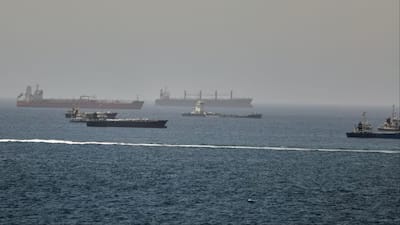
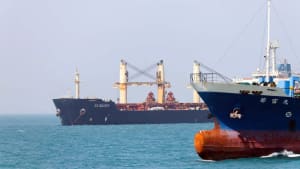
Caption: Oil Exports Through Strait of Hormuz Surge Following U.S.-Iran Agreement • Image rights reserved by Annuity Outlook.
Global Energy Markets See Recovery as Tankers Resume Transit Through Key Shipping Route
The Strait of Hormuz, one of the world's most strategically important energy corridors, is once again witnessing increased oil traffic following a recent agreement between the United States and Iran aimed at restoring safe navigation through the region.
According to shipping and trade intelligence data, millions of barrels of crude oil that had been stranded in the Persian Gulf for months are now moving toward international markets, providing relief to global energy supply chains and reducing concerns over potential disruptions to oil exports.
Oil Tankers Resume Operations After Months of Delays
More than 35 million barrels of crude oil have successfully exited the Persian Gulf through the Strait of Hormuz since maritime restrictions began easing under the new agreement.
Many of these vessels had remained anchored or delayed for several months due to heightened security concerns and restrictions that emerged during the conflict in the region. As navigation conditions improved, tanker operators resumed scheduled routes to major energy-importing nations, particularly across Asia.
Industry analysts note that the reopening of this vital shipping lane marks a significant step toward restoring stability in global oil transportation.
Oil Flows Rebound but Remain Below Historical Levels
Recent shipping data indicates that crude oil exports moving through the Strait of Hormuz have increased substantially compared to earlier months.
Daily shipment volumes have recovered significantly, reaching their highest levels since hostilities disrupted normal maritime operations. However, export levels remain below the volumes recorded before the conflict, when the strait routinely handled a much larger share of global oil trade.
The gradual recovery reflects both improving security conditions and the time required for shipping operators to reposition vessels and normalize supply chains.
Dany is a business journalist with Annuity Outlook Magazine, with over 16 years of experience across print, digital, and wires. He covers business, technology, policy, and corporate developments, with a focus on in-depth reporting and analysis. Over the years, he has worked across multiple editorial platforms. Skilled in content creation, editing, proofreading, and overseeing print layouts, his career spans multiple editorial platforms.
The Strait of Hormuz is widely considered one of the most important chokepoints in global energy markets.
Connecting the Persian Gulf to international waters, the route serves as a critical gateway for oil exports from several major producing nations. Any disruption in the region can have immediate consequences for energy prices, shipping costs, and global economic stability.
Because a substantial percentage of the world's seaborne crude oil passes through this narrow waterway, developments affecting navigation are closely monitored by governments, energy companies, and financial markets worldwide.
Security Conditions Continue to Improve
Maritime security organizations have reported a reduction in overall threat levels for commercial vessels operating in the region.
While risks have not been eliminated entirely, shipping companies are showing increased confidence in the safety of the route. Enhanced coordination among international naval forces, regional governments, and maritime agencies has contributed to improved operating conditions.
Industry observers believe the lower threat assessment is a key factor encouraging tanker operators to resume normal transit schedules.
Impact on Global Oil Markets
The increase in exports through the Strait of Hormuz has helped ease concerns about supply shortages and has contributed to greater stability across global energy markets.
As additional oil reaches international buyers, particularly in Asia, market participants expect supply pressures to moderate. Increased export activity also provides greater flexibility for refiners and energy traders managing inventories and procurement strategies.
While geopolitical developments remain an important factor, the restoration of shipping activity has improved confidence among energy market participants.
International Efforts Support Maritime Operations
Global organizations and regional stakeholders continue to work together to ensure safe passage for commercial vessels operating in the Gulf.
International maritime agencies have coordinated with governments and shipping companies to establish procedures that support navigation safety, vessel movements, and emergency response capabilities.
These collaborative efforts are intended to protect both cargo shipments and the thousands of seafarers who depend on secure maritime routes throughout the region.
What This Means for Energy Prices
The reopening of critical shipping routes and rising export volumes could help reduce upward pressure on oil prices if current trends continue.
However, analysts caution that energy markets remain sensitive to geopolitical developments, production decisions by major oil-producing countries, and broader economic conditions.
The balance between supply recovery and global demand growth will likely determine the direction of oil prices in the coming months.
Looking Ahead
The recent increase in oil exports through the Strait of Hormuz represents an important milestone for global energy markets. As shipping activity continues to recover, industry participants remain focused on maintaining secure trade routes and ensuring stable energy supplies.
Although challenges remain, the reopening of one of the world's most critical energy corridors offers encouraging signs for international trade, oil markets, and economic stability.
For now, the resumption of tanker traffic through the Strait of Hormuz signals a positive step toward restoring confidence in global energy transportation and strengthening supply chain resilience.